
Sonic branding is also called audio branding in many industry contexts — the terms are often used interchangeably. But they’re not identical, and the distinction matters when you’re deciding how strategically to invest in sound for your brand.
The short version: audio branding is the broad category. Sonic branding is the strategic, identity-focused subset of it. All sonic branding is audio branding, but not all audio branding is sonic branding.
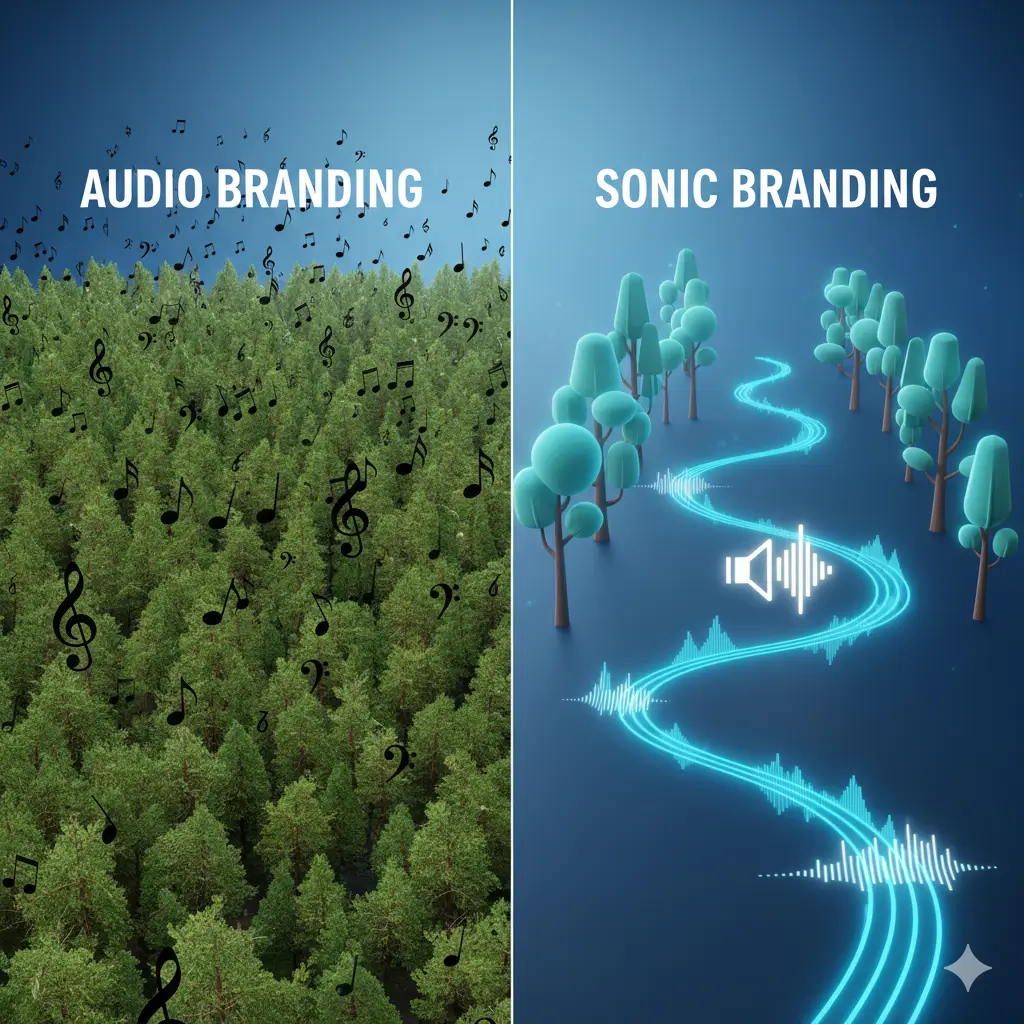
What is audio branding?
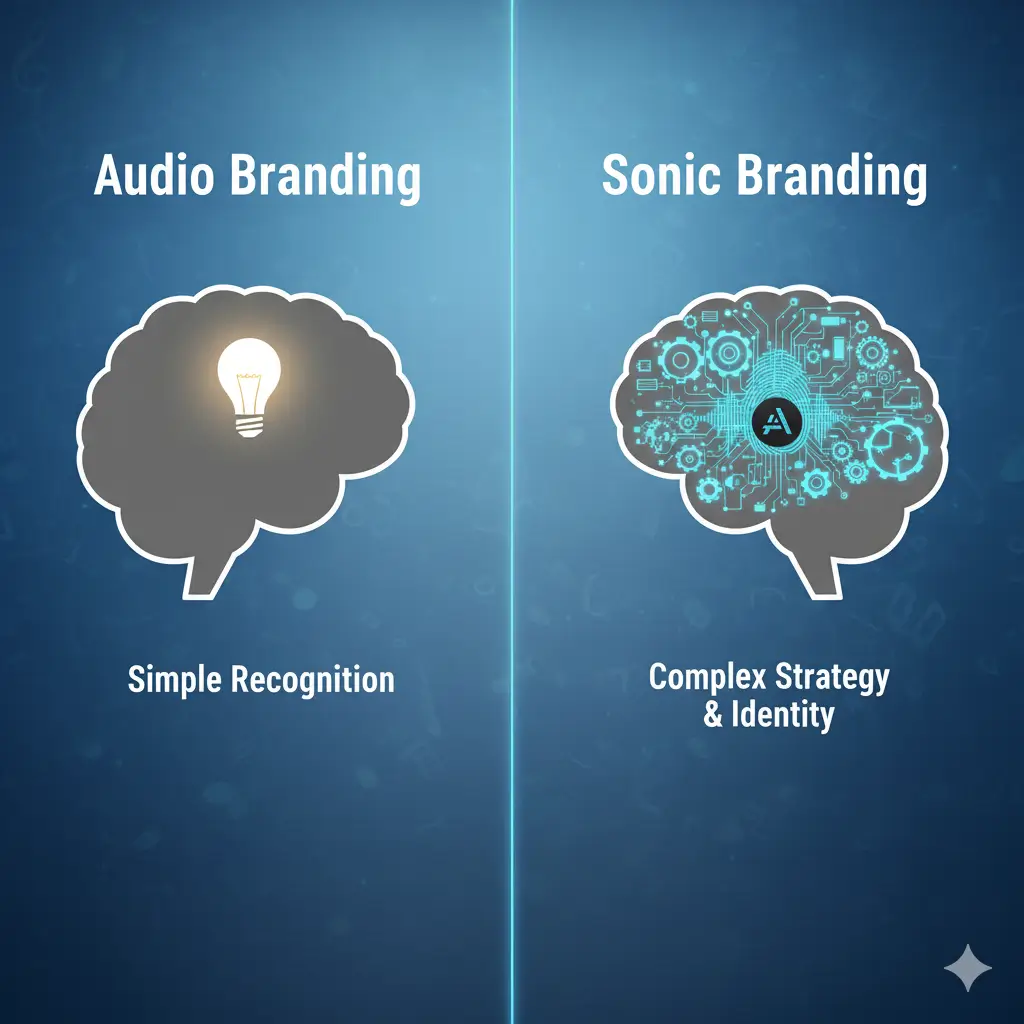
Audio branding — sometimes called audio marketing or sound branding — is the general practice of using any music or sound in brand communications. The goal is to leverage sound’s influence on mood and attention to differentiate a brand from competitors.
It’s an umbrella term. It covers any context where a brand uses sound, whether that’s strategic or not:
On-hold music (even if it’s generic licensed stock music)
Background music in a retail store
A one-off jingle in a local radio ad
Sound effects in a presentation or explainer video
Music in a social media video that was picked for vibe, not brand fit
The common thread: sound is being used in a brand context. It doesn’t have to be unique, ownable, or even consistent. The brand is simply present in audio form.
What is sonic branding?
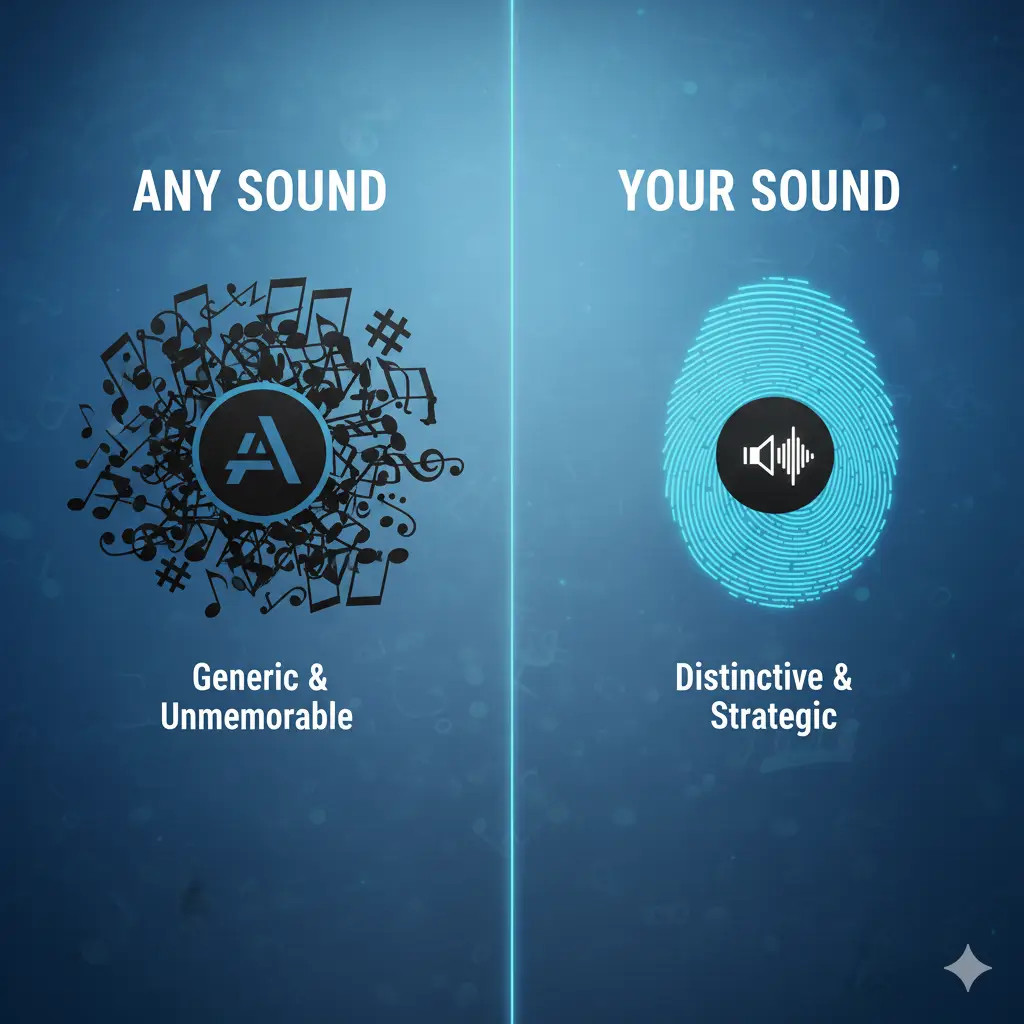
Sonic branding is the strategic and deliberate creation of a unique, ownable sonic identity — a set of sounds that represents the core essence, values, and personality of a brand so consistently that people recognize the brand from the sound alone.
Where audio branding can be generic, sonic branding is exclusive. Where audio branding can be tactical, sonic branding is always strategic. The difference isn’t just semantic — it’s the difference between using sound and owning sound.
Sonic branding typically includes:
A sound logo — a short, distinctive audio signature (Netflix’s “ta-dum,” Intel’s four-note bong, McDonald’s “I’m Lovin’ It” closing notes)
A brand track or anthem — a longer musical piece that carries the brand’s personality across video content, events, and campaigns
UI sounds — app notifications, interaction sounds, and product audio cues that are distinctly “on-brand”
Voiceover style and tone guidelines — the consistent vocal personality across all brand communications
An audio design system — documented rules ensuring every audio touchpoint sounds like the same brand
The goal is instant recognition and emotional connection. Every time someone hears the sound, it reinforces the brand identity — building the same kind of equity that a well-designed visual logo builds over time.
The key differences
Dimension | Audio branding | Sonic branding |
|---|---|---|
Scope | All uses of sound by a brand | Strategic, identity-defining subset of audio branding |
Intent | Use sound to support marketing | Create an ownable sonic identity |
Sounds used | Can be generic or licensed | Custom-created, exclusive to the brand |
Consistency | Variable across touchpoints | Systematic and consistent by design |
Output | Any audio in brand contexts | Sound logo, brand track, UI sounds, audio system |
Recognition | Not necessarily identifiable | Designed for instant brand recall |
Which one do you need?
If your brand is early-stage and you’re simply trying to add sound to your marketing, audio branding — even using licensed tracks — is a valid starting point. It costs less and gets something in place.
If your brand is ready to build long-term recognition and differentiation, sonic branding is the investment that compounds. Like a visual identity, a sonic identity becomes more valuable the more consistently it’s applied. A year of consistent sound logo usage is worth more than five years of generic stock music.
The practical question is: do you want your brand to sound like itself, or just to have sound? Sonic branding answers the first question. Audio branding covers both.
TL;DR
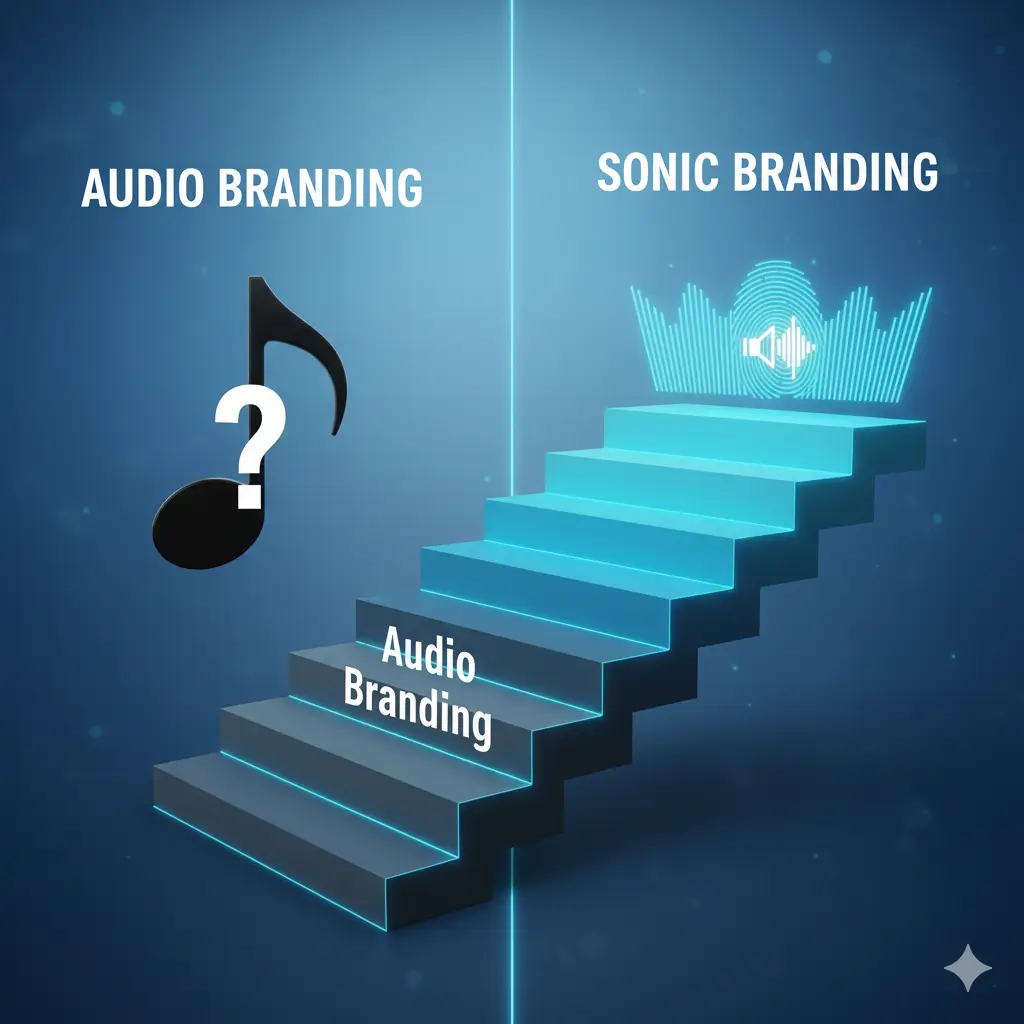
Audio branding = any use of sound in brand contexts. Sonic branding = a strategic, ownable sound identity designed for instant recognition and emotional connection.
Sonic branding is also called audio branding in casual usage — but when precision matters (like when scoping a project or briefing a sound designer), the distinction is important. Sonic branding implies a higher level of strategy, exclusivity, and systemic thinking.
To understand what a full sonic branding system involves, see the 4 fundamentals of sonic branding. For the business case, here’s how sonic branding supercharges brand recognition.
At Supadark, we build sonic identities for brands and creative studios — from sound strategy to implementation on your Framer site. See the services.