Quick answer: the sonic branding process has six stages — (1) understand the brand, (2) research the sonic landscape, (3) define a sonic strategy, (4) create the assets, (5) implement with guidelines, and (6) measure and evolve. A full programme runs roughly 6–12 weeks; a lean sound-logo-only project can land in 2–3. Here's how each stage works.
Sonic branding is not just about picking a catchy jingle. It's a strategic, methodical endeavour to weave sound into the very fabric of a brand, creating an audio identity that is as recognizable and impactful as its visual logo or brand colors. This identity must be unique, authentic to the brand's core, and consistently applied.

Stage | Goal | Key output | Typical timeline |
|---|---|---|---|
1. Understand the brand | Capture brand DNA & target emotion | Sonic brief | 1–2 weeks |
2. Research & analysis | Map competitors, touchpoints, culture | Sonic audit | ~1 week |
3. Sonic strategy | Define sonic DNA & asset list | Strategy document | ~1 week |
4. Creative development | Compose, iterate, produce | Sound logo, theme, UX sounds | 3–6 weeks |
5. Implementation | Roll out + standardise usage | Assets + brand sound manual | 1–2 weeks |
6. Measurement & evolution | Track recall, refine over time | KPIs + refresh cadence | Ongoing |
Here's a deeper look at each stage:
1. Understand the Brand (The Foundation)
This initial phase is all about deep immersion into the brand's DNA. Without this understanding, any sound created will be superficial or misaligned.
Define the brand’s personality, values, mission, and target audience:
Personality: Is the brand playful, sophisticated, rugged, innovative, traditional, empathetic, authoritative? These adjectives translate into musical characteristics (e.g., tempo, instrumentation, tonality).
Values: What does the brand stand for (e.g., sustainability, customer-centricity, quality, affordability)? Sound can subtly reinforce these values.
Mission: What is the brand's overarching purpose or goal? The sonic identity should support this.
Target Audience: Who is the brand trying to reach? Their demographics, psychographics, cultural background, and musical preferences are crucial. A sound appealing to Gen Z will likely differ from one targeting Baby Boomers.
Conduct stakeholder interviews to capture internal perspectives and aspirations: speak with marketing, leadership, sales, and product to uncover how they perceive the brand, what they want it known for, any existing uses of sound, and their vision for the future. This also ensures buy-in from the start.
Clarify the brand’s positioning and desired emotional impact: where the brand sits relative to competitors (luxury, value, disruptor) and how it should make people feel (trusted, excited, comforted, inspired). Sound is exceptionally powerful at evoking emotion — see the 4 fundamentals of sonic branding for why.
2. Research and Analysis (The Contextual Scan)
Once the brand's internal landscape is understood, the focus shifts to the external environment and practical considerations.
Audit the current sonic landscape and review how competitors use sound: does the brand already use sound (hold music, app notifications, video intros)? Are competitors establishing sonic conventions? The goal is to find a unique sonic space, avoiding imitation while understanding the existing "noise." For inspiration, study examples of successful sonic branding.
Study audience preferences and cultural context to ensure relevance: market research, focus groups, or trend analysis relevant to the audience. Sounds carry different meanings across cultures — global brands need to be particularly mindful.
Identify all touchpoints where sound will be experienced: marketing (TV/radio, video, social, podcasts), digital (websites, apps, software), physical (retail, events), product sounds, and customer service (on-hold, IVR). A comprehensive list is vital before strategy.
3. Develop a Sonic Strategy (The Blueprint)
This stage translates the insights from the first two steps into an actionable plan.
Outline how sound will express the brand and where it will be used: the "sonic DNA document" articulates the core sonic characteristics (e.g., "optimistic, human-centric, with a modern, slightly tech-forward feel") and maps specific approaches to each touchpoint — how the identity adapts for a short ad versus in-store ambiance.
Decide on the sonic assets needed:
Sonic Logo: a very short, distinctive phrase (Intel's "bong," Netflix's "ta-dum") for instant recognition.
Brand Theme/Anthem: a longer piece capturing the brand's essence, adaptable into various lengths.
UX/UI Sounds: functional sounds for digital interfaces — informative yet unobtrusive.
Soundscapes/Ambient Music: background music for physical spaces or longer content.
Brand Voice Guidelines: tone and style for any voiceovers.
4. Creative Development and Production (The Creation)
This is where the strategy comes to life through music and sound design.
Compose initial demos and explore styles: composers create multiple concepts based on the strategy, presenting different interpretations to the brand.
Collaborate closely for feedback and iteration: a highly iterative loop — the brand listens, gives feedback ("too serious," "more uplifting"), the creative team refines, always referencing the brand understanding and sonic strategy.
Finalize the signature elements: once approved, elements are fully produced, mixed, and mastered, including different versions and lengths (e.g., 5s, 15s, 30s cuts of the brand theme).
5. Implementation and Consistency (The Rollout)
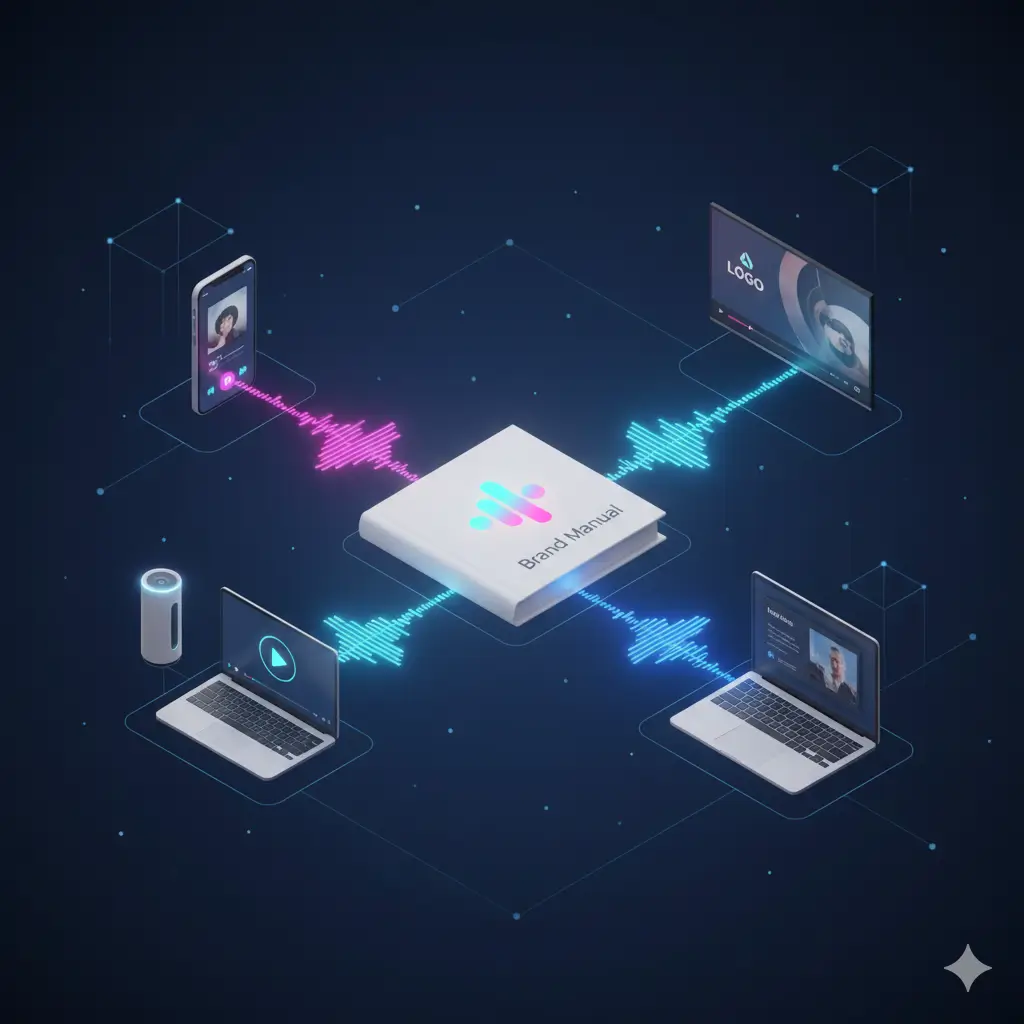
Creating the sounds is only half the battle; deploying them consistently is paramount.
Deliver the final assets and a brand sound manual: audio files in the right formats, plus guidelines detailing how, when, and where to use each asset — correct sonic-logo versions, how to integrate the theme with visuals, volume rules, and clear "do's and don'ts."
Integrate across marketing, digital, retail, and customer service: brief and equip every team to use the assets correctly, and phase out old, inconsistent sounds.
Empower partners: the manual lets internal teams and external partners (ad agencies, developers) apply the sonic branding correctly without supervision.
6. Measurement and Evolution (The Long-Term View)
Sonic branding is not a "set it and forget it" exercise. Its effectiveness should be monitored and adapted over time.
Monitor impact on recognition and engagement: brand-recall surveys on the sonic logo, A/B testing content with and without the sound, social sentiment, and engagement metrics on audio-bearing content, correlated with sales or satisfaction where possible.
Gather feedback and refine as the brand evolves: brands shift strategy, target new audiences, and enter new markets — the sonic identity may need cultural adaptation or a refresh to stay relevant.
How long does sonic branding take — and what does it cost?
A full sonic branding programme typically runs 6 to 12 weeks from kickoff to delivered assets: discovery and strategy take 2–4 weeks, creative development 3–6, and rollout 1–2. A focused engagement — a sound logo plus a couple of UX sounds — can land in 2–3 weeks. Cost scales with the number of assets and touchpoints rather than the hours of music: a single sound logo is a fraction of a full system with a theme, UX suite, and soundscapes. For a structured view of pricing tiers, see our sonic branding pricing guide.
Our approach at Supadark
We run this process audio-first and lean. For startups, solo founders, and music-led brands, we don't insist on the full six-week corporate version — we compress discovery into a sharp brief, lock the sonic DNA fast, and ship a sound logo plus the handful of UX sounds that actually appear on the site. Because we also build the Framer site, the sonic identity is wired into the product from the first component, not bolted on after launch. The full programme is there when a brand scales across many touchpoints; the lean version gets a distinctive sound live in weeks.
TL;DR
Sonic branding follows six stages: understand the brand, research the landscape, set a sonic strategy, create the assets, roll them out with guidelines, then measure and evolve. Done well — with deep brand understanding, a clear strategy, tight creative collaboration, and consistent implementation — the brand's audio identity becomes a strategic asset that enhances recognition, evokes the right emotions, and builds a stronger connection with its audience, rather than an afterthought.
Frequently asked questions
What are the steps in the sonic branding process?
Six: understand the brand, research the sonic landscape, define a sonic strategy, create the assets, implement with guidelines, then measure and evolve. Each builds on the last, from brief to ongoing maintenance.
How long does sonic branding take?
A full programme typically runs 6–12 weeks from brief to delivered assets — discovery and strategy take 2–4 weeks, creative development 3–6, and rollout 1–2. A lean sound-logo-only project can land in 2–3 weeks.
What deliverables come out of the process?
Usually a sonic logo, a flexible brand theme in several lengths, a set of UX/UI sounds, and a brand sound manual that keeps usage consistent. Larger brands add soundscapes and voice guidelines.
What's the difference between a sonic logo and a brand theme?
A sonic logo is a 1–3 second signature for instant recognition (Intel's bong); a brand theme is a longer, adaptable piece that captures the brand's essence and flexes across ad lengths and contexts.
Do small brands and startups need the full process?
Not all at once. Start with a sound logo and a couple of UX sounds applied consistently. The full six-stage programme suits brands scaling across many touchpoints.
How do you measure if sonic branding works?
Brand-recall surveys on the sonic logo, A/B tests of content with and without the sound, social sentiment, and engagement metrics on audio-bearing content. Recognition and consistency are the leading indicators.
Go further
Curious about what your specific brand could sound like? If you are ready to turn your visual identity into a complete sensory experience, now is the moment to start the conversation about your sonic branding system.