You designed a sound logo. You tested it against real listeners. Then it sat in a folder named "final_v3" and never made it past the homepage.
This is the most common failure mode in sonic branding, and it has nothing to do with the sound itself. A sound logo earns recognition through repetition across contexts. One placement is a demo. Twenty placements is an identity.
The rollout is where sonic branding becomes real. Here is the process we use to take a tested sound logo and deploy it across every surface a brand owns — in the right variant, at the right specs, in the right order.
Shipping the file is not shipping the identity
There is a gap between "the sound logo exists" and "the sound logo works". Recognition science is blunt about this: audio memory builds through repeated exposure in consistent contexts. A listener needs to meet your sound multiple times, in multiple places, before the association locks in.
That means the deliverable is not the WAV file. The deliverable is the presence of that sound across your brand's surface area. If you have already run a sonic brand audit, you know exactly how much of that surface area currently sits silent or, worse, plays random stock audio.
The rollout closes that gap. It is unglamorous, operational work — and it is where most of the return on your sonic investment actually comes from.
Map your touchpoints before you deploy anything
Start with an inventory, not an upload. List every surface where your brand makes sound or could make sound. For most independent brands and studios, the map looks like this:
Owned digital: website (page loads, interactions, notifications), product or app (onboarding, confirmations, errors), email (video embeds only — never autoplay audio in email).
Content: YouTube intros and outros, podcast bumpers, tutorial videos, product demos, webinar openers.
Social: short-form video (Reels, TikTok, Shorts), audio-on ads, animated logo stings on X and LinkedIn video posts.
Live and IRL: event openers, conference talks, retail or studio spaces, phone hold audio if you have it.
Rank each touchpoint by two factors: audience volume and audio-on rate. A TikTok clip has a high audio-on rate; a LinkedIn feed does not. Your rollout order comes from this ranking, not from what is easiest to update first.
Match the variant to the touchpoint

A sound logo is not one file. If you followed our approach in How to Design a Sound Logo, you already have a small family of assets. The rollout assigns each variant to its natural home:
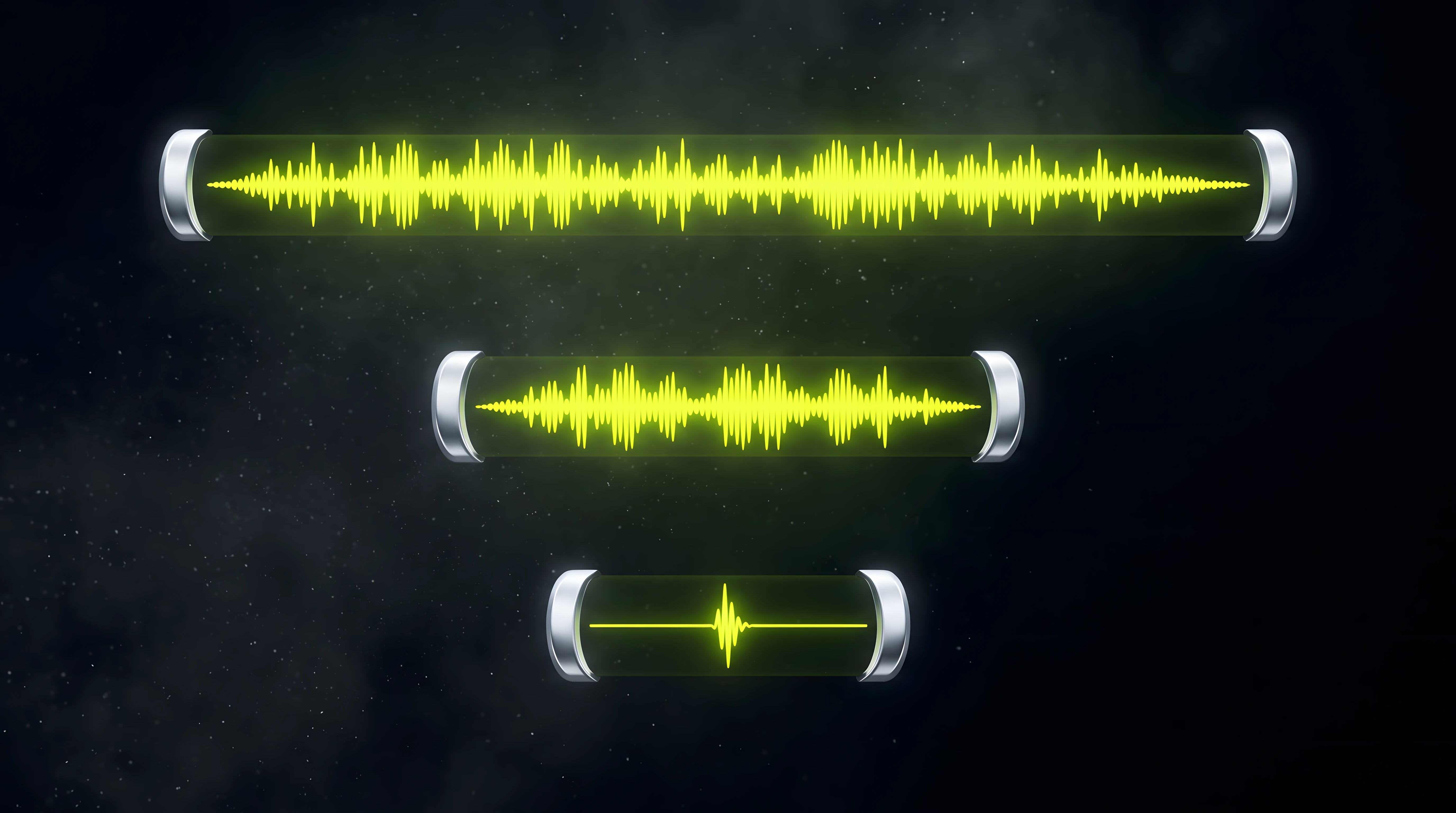
Full version (2–3 seconds): video intros, event openers, podcast bumpers. Anywhere the audience has committed attention and the moment can breathe.
Short version (0.5–1 second): app interactions, website micro-moments, ad end-cards. The compressed hit that does the daily work.
Tag or mnemonic (the core motif alone): notification sounds, UI confirmations, anywhere repetition frequency is high. High-frequency touchpoints need the most minimal expression, or the sound becomes wallpaper at best and an irritant at worst.
The rule: the more often a touchpoint fires, the shorter the variant it gets. An onboarding screen heard once can carry the full logo. A success state heard fifty times a day cannot.
Get the technical specs right per channel
Nothing kills a sound logo faster than bad encoding. Each channel has its own delivery reality:
Web: serve compressed formats (AAC or Opus around 128 kbps), keep files under 100 KB for interaction sounds, and always load audio after user interaction to respect autoplay policies. Loudness sits well below music level — interaction audio should whisper, not announce.
Video platforms: export at the platform's loudness target, typically −14 LUFS integrated for YouTube. Deliver the sound logo inside the video file, mixed against your voiceover, not slapped on top at full scale.
Broadcast and ads: −23 LUFS (EBU R128) in Europe. If an agency or media buyer handles placement, ship them the spec sheet, not just the file.
App and product: short variants as uncompressed WAV or CAF at source, converted by the build pipeline. Document the exact trigger events so developers do not improvise.
Every one of these specs belongs in your sonic brand guidelines document. If the guidelines exist and nobody deploys from them, they are decoration.
Sequence the rollout in three phases
Do not launch everywhere at once. A phased rollout lets you catch problems while they are cheap.
Phase 1 — Flagship placements (week 1–2): website hero moment, YouTube intro/outro, one high-frequency social format. These are the surfaces you control end to end. Watch for playback issues, loudness mismatches, and early audience reactions.
Phase 2 — Product and content (week 3–6): app or product sounds, podcast bumpers, email video embeds, remaining social formats. This phase usually involves other people — developers, editors — so your guidelines document does the talking.
Phase 3 — Everything else (ongoing): events, partner content, ads, IRL spaces. By now the sound has a track record and you can hand assets to third parties with confidence.
Each phase ends with a check: is the sound playing at the right loudness, in the right variant, at the right moment? Fix drift before adding surfaces.
Keep the sound consistent once it is everywhere
Deployment without governance decays fast. Six months in, someone re-exports the logo from a compressed MP3, an editor pitches it up "to fit the edit", and a freelancer grabs an old version from a shared drive.
Three habits prevent this:
One canonical source. A single folder (or DAM entry) holds the approved variants. Everything else links to it. Old versions get archived, not deleted — but they leave the working directory.
A usage log. A simple table: touchpoint, variant used, spec, date deployed, owner. Thirty minutes to build, and it turns your next sonic brand audit from archaeology into a checklist.
A no-edit rule. Nobody re-times, re-pitches, or re-mixes the sound logo without sign-off. Trimming silence is fine. Touching the motif is not.
Measure what the rollout changes
You validated the sound before shipping it — that testing gave you a pre-launch baseline. Now measure against it in the wild.
Practical signals for a small team: audio-on completion rates on short-form video before and after adding the sting, recall in lightweight follow-up surveys ("can you hum our sound?"), engagement deltas on videos with and without the intro, and direct replies or comments mentioning the sound. None of this requires an enterprise research budget. It requires consistency and a spreadsheet.
Give it a full quarter before judging. Recognition compounds slowly, then all at once.
Self-audit: is your rollout actually complete?
Run this checklist against your current deployment:
Every touchpoint from your inventory has a deployed variant, or a documented reason it stays silent
Each variant matches its touchpoint's frequency (short where repetition is high)
Loudness is normalized per channel spec, not eyeballed
One canonical asset source exists, and old versions are out of circulation
Trigger events in product are documented, not tribal knowledge
A usage log exists and someone owns it
You have a baseline metric from pre-launch testing to compare against
Five or more unchecked? Your sound logo is a demo, not an identity. That is fixable in a month of focused work.
FAQ
How long should a full rollout take?
For an independent brand or small studio: four to eight weeks for the owned surfaces, then ongoing for third-party and event placements. Slower is fine. Inconsistent is not.
Do we need a different sound logo per platform?
No — you need different variants of the same logo. The motif never changes; the length, loudness, and format do. Platform-specific sound logos defeat the purpose of recognition.
What if a touchpoint feels wrong for sound?
Then leave it silent, deliberately. A sound logo forced into a context where audio annoys (email, some feed environments) damages the association you are building everywhere else. Silence is a valid placement decision when it is documented.
Can we roll out before formal testing?
You can, but you are gambling with your most expensive channel: repetition. If the sound has a flaw, the rollout amplifies it across every touchpoint. Test first — even a lightweight pass beats none.
A sound logo that lives on one page is a signature nobody sees. The rollout is how it becomes the thing people recognize before they see your name.
The web is the one touchpoint where a rollout most often breaks in the last hundred metres. We wrote up the failure modes separately in how to ship a sound logo on the web without breaking it.
If you want help mapping touchpoints, packaging variants, or building the delivery kit your team deploys from, our sonic branding services cover the full path — from audit to rollout.